

For Streetspace, sustainability starts with the performance of the building itself: reducing the energy it needs, using materials responsibly and creating an environment that remains useful for the long term.
Our buildings are designed as permanent education buildings, with energy performance, material use, occupant wellbeing and adaptability considered together from the outset. The aim is not to add sustainability measures to a finished design, but to make better environmental performance part of the decisions that shape the building.
Reducing energy demand through design
Energy performance starts with the building fabric. High-performing insulation and glazing reduce demand, while efficient building services provide the heating, cooling, ventilation and lighting needed to maintain a comfortable internal environment. Renewable generation can then make a further contribution, but reducing the amount of energy the building requires comes first.
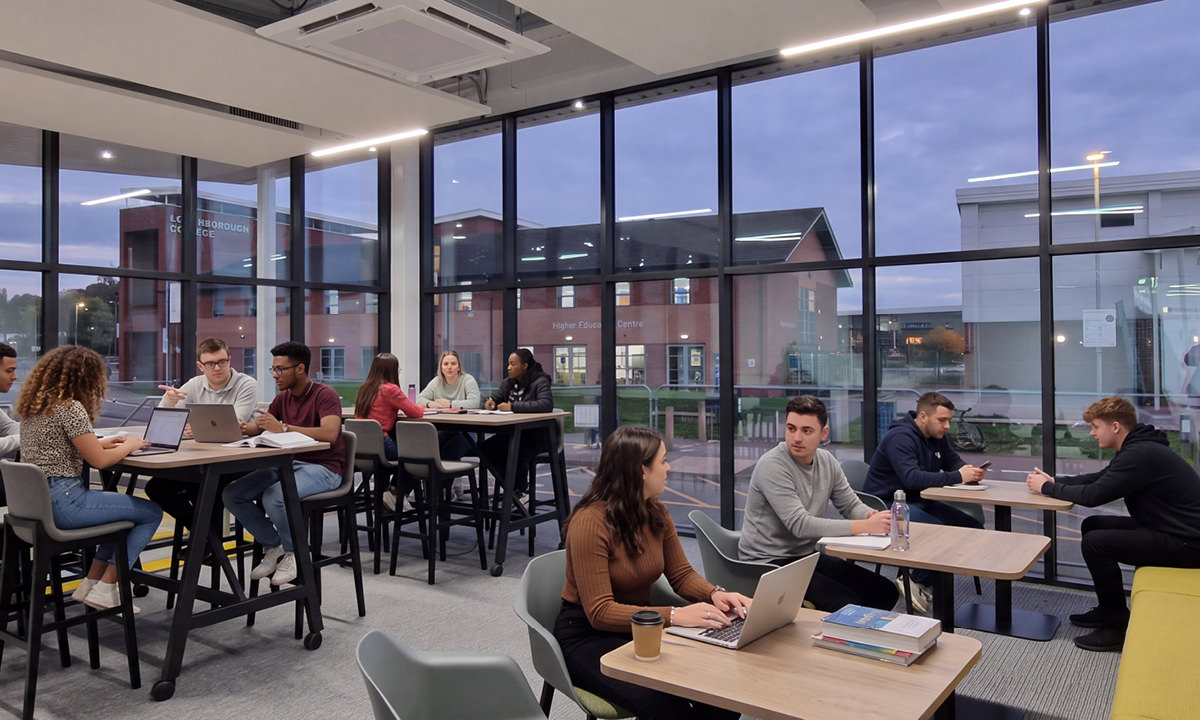
The recently completed Digital Skills Hub at Loughborough College demonstrates the performance this approach can achieve. The building achieved a Part L pass and design-stage EPC rating of A10, supported by high-performance fabric, all-electric HVAC, mechanical ventilation with heat recovery and efficient lighting. A 17.5 kWp solar PV installation forms part of the same energy strategy, combining lower demand with efficient all-electric services and on-site generation to reduce operational carbon and long-term energy use.
Making better use of materials
The environmental impact of a building extends well beyond the energy it consumes in operation. The materials used to create it, the resources involved in their manufacture, how long they remain useful and what happens when individual components reach the end of their service life all contribute to its wider impact.
Our approach considers material efficiency, durability, maintenance and replacement alongside responsible sourcing and recycled content. Increasingly, we are also looking at how buildings and components can be adapted, disassembled, reused or recycled. A material is not necessarily a sustainable choice simply because it can eventually be recycled; its embodied impact, durability and contribution to the long-term performance of the building also need to be understood.
Alongside this, we are developing a consistent approach to measuring whole-life carbon across our projects. The objective is to use carbon information while design decisions can still be influenced, comparing different approaches and identifying where changes can make the greatest difference rather than simply calculating the result once the building has already been designed.
Creating healthy learning environments
Environmental performance and the quality of the internal environment should not be treated separately. A building that uses less energy still needs to be a good place to learn, teach and work, particularly in education environments that can be intensively occupied for long periods of the day.
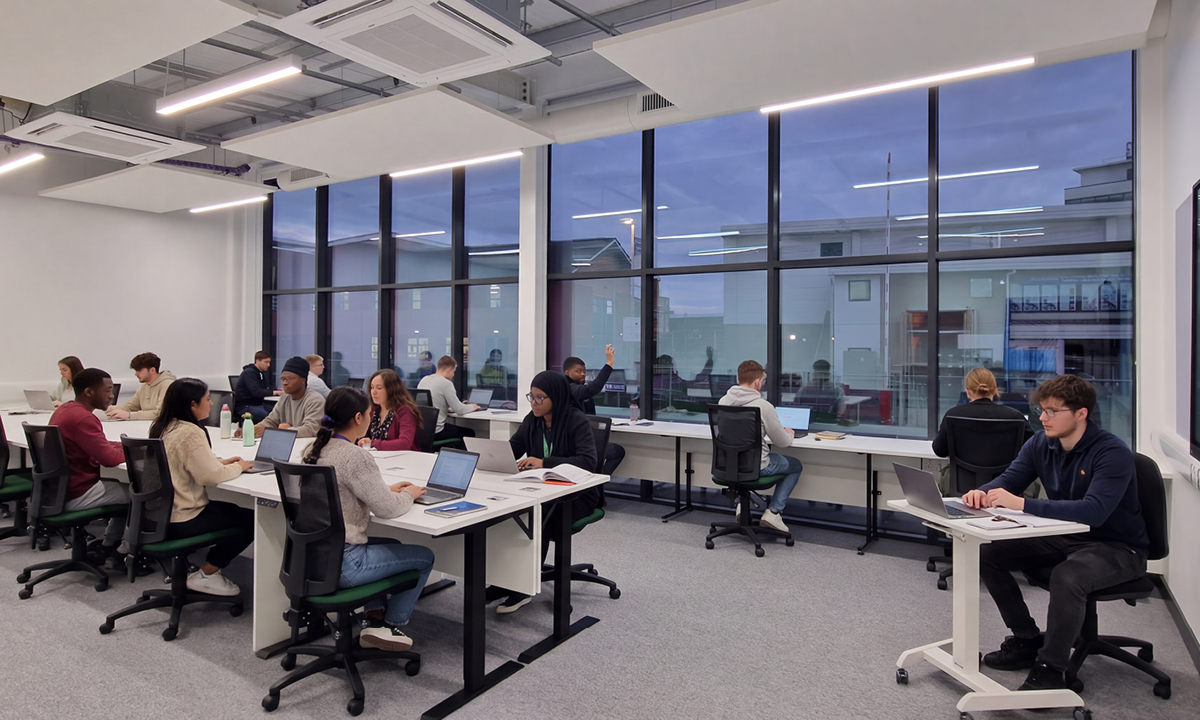
Daylight, fresh air, thermal comfort and acoustics are therefore considered as building-performance outcomes in their own right. High-performance fabric and effective ventilation need to work alongside natural light and an internal environment appropriate to the number of people and activities the building will support. The objective is efficient building performance without compromising the experience of the people who use it.
Designed for a longer useful life
Education requirements do not remain static. Pupil numbers change, curriculums and technology develop, and the way accommodation is used can alter substantially during the life of a building. Our buildings are designed with that longer view in mind, considering layout, maintenance, component replacement and the potential for future adaptation as the design develops.
Longevity is an important part of sustainability. A building that can respond to changing requirements and remain useful for longer makes better use of both the financial and environmental resources invested in its construction. For schools, colleges and trusts, that means looking beyond performance at completion to how effectively the building can continue to operate, adapt and be maintained over decades of use.
Measuring performance and improving it
We are developing a consistent sustainability framework so that performance can be understood and compared more systematically across our projects. Operational energy and renewable generation sit alongside measures of upfront and whole-life carbon, airtightness and fabric performance, Environmental Product Declaration coverage, responsible and recycled material content, construction waste and recovery, and the circularity and adaptability of the building.
The purpose is not measurement for its own sake. Meaningful targets established early can inform decisions while the building is being designed and constructed, with completed performance then providing evidence for what should improve next. As project data grows and building technology, evidence and standards develop, that learning can be carried into future buildings.
Sustainability is therefore not a fixed specification or a set of features added to every project. It is an ongoing process of understanding performance, making better-informed decisions and improving what we deliver over time.
Discuss your project
If you are considering a new teaching, dining or specialist building, Streetspace can bring building performance, cost and long-term use into the conversation from the earliest stages of the project.